
Arnold Ross Richardson (SN 264338) has been difficult to track down.
Arnold Richardson was born July 10, 1919. At the time of his enlistment, he resided in Peabody, Massachusetts. By 1944, Richardson was one of the increasingly rare breed of Marine who had enlisted in the peacetime Corps. Muster rolls indicate that Richardson appeared in a recruitment office in Boston on April 8, 1938 - age 17 - and was assigned to recruit training at Parris Island. Upon completion of the rigorous course, he was assigned to F Company, 5th Marines, 1st Marine Brigade, and traveled to Quantico, VA in June of 1938. He spent two months in that company, then was transferred to G Company for unknown reasons.
Except for a month where he is reported at Camp R P Williams in Brentsville, Private Richardson spent the remainder of 1938 with G/2/5 at Quantico. He was granted leave on the 28th of December, and as a young Marine released around the holidays, presumably raised a good amount of hell before reporting back January 6, 1939.
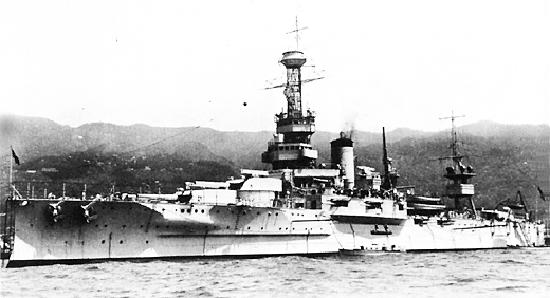 Private Richardson and Company G would shortly get a taste of exotic living, as their muster rolls from January indicate that they were posted first to the USS Wyoming, bound for Culebra, Puerto Rico. The Wyoming, an older Dreadnought, had been decommissioned recently, and would serve in World War Two as a gunnery training vessel.
G/2/5 arrived in Puerto Rico and proceeded to make their home at Camp L M Little in Vieques. Unfortunately, this tropical sojourn didn't last long, and the regiment returned to Quantico in March. Richardson took another leave in mid-April, celebrating the end of his first year in the Marine Corps.
May of 1939 saw Private Richardson detached from his company and posted to the Marine
 Detachment, US Naval Prison at the Navy Yard in Portsmouth, NH. This was not exactly ideal duty. The prison, known as "The Castle" for its architecture and "The Alcatraz of the East" for its level of security, built quite a reputation in its years of operation. The prison was renowned for being one of the harshest facilities in the East Coast - later in the war, captured German submariners were interred there - and the rules were hardly less strict for the Marines on guard. If an escape was attempted, the Marines were under orders to shoot to kill, and heaven help the guard who let a prisoner escape successfully - he would then be forced to serve the remainder of the condemned man's sentence. As can be expected, this led to extraordinary vigilance among the Marines, and not a single prisoner made good his escape.
Richardson narrowly avoided becoming an inmate himself. Shortly after midnight on September 15, for whatever reason, Private Richardson left his post without being properly relieved. The punishment for this infraction was harsh. Private Richardson was sentenced to ten days solitary confinement on bread and water - a full ration was allowed every third day - and forfeited $7 of his pay per month for two months.
The spell in the brig seems to have straightened Private Richardson out. For the rest of the year, his enlistment records are clean.
A nasty incident occurred within the detachment in February, 1940. PFC Perry Edwards was arrested on assault charges for "striking another person in the naval service with a dangerous weapon (knife)" and was served with a bad conduct discharge. This incident, combined with a number of transfers, lead to a flurry of promotions. Richardson was made a Private First Class on February 23, 1940.
The Marines of the Navy Yard Detachment were afforded a brief change of scenery in May; the majority of them reported to the Wakefield, MA Rifle Range for small-arms training. PFC Richardson attended from May 4 through May 17, and returned to Portsmouth rated as Sharpshooter, the second of three proficiency ratings.
The remainder of the summer was spent on the familiar grounds of the Navy Yard. In September of 1940, PFC Richardson arrived at the New York Navy Yard for duty aboard a receiving ship - a temporary home for new sailors who have yet to be assigned to a crew.
Information becomes scare with the end of the USMC Muster Rolls in December, 1940. Arnold Richardson continued to rise through the ranks, attaining the stripes of a senior NCO. He is referred to by Captain Schechter as "First Sergeant Richardson," though the National Archives lists him as a Technical Sergeant.
(The term Technical Sergeant - TSgt - is a little unclear to me. The rank was adopted from the Army after the First World War, and appears to be roughly equivalent to that of Gunnery Sergeant; as stated in United States Marine Corps Ranks And Grades, 1775-1969:
"...Technical Sergeant, like gunnery sergeant a rank in the second pay grade, was authorized for non-commissioned officers holding the title of gunnery sergeant but performing duties entirely divorced from ordnance..."
At any rate, Richardson held a fairly high rank for an enlisted man.)
Richardson also found the time and inclination to get married. He left shore duty to go overseas with A/1/24, and participated in the battle of Namur in January, 1944.
On July 5, 1944, Arnold Richardson had one last opportunity to use his Sharpshooter rating. As the situation of the patrol worsened, Sergeant Richardson tried to provide covering fire for three Marines stranded in the open. He was hit and killed "almost immediately," in the words of Captain Schechter.
Sergeant Richardson was buried with his comrades in the 4th Marine Division cemetery on Saipan. His remains were removed after the war, and re-interred according to the wishes of his next of kin.


1 comment:
Another wonderful entry, Geoff. Thank you for doing all this work and sharing the stories of these brave men with us.
Post a Comment