Showing posts with label Iwo Jima. Show all posts

Wednesday, September 7, 2011

Able Company after Iwo Jima - two views

(click on image for full size)

This first shot of the company is apparently composed of the original contingent, plus a few who transferred from Company D in early 1944. The identifications, which George and I labored over many a time, were finally kindly provided by Les Best, son-in-law of company clerk William J. Davis.


Standing, left to right:
Robert Larson, Edward DuBeck, Peteus Staeyert, Leo Mann, Ronald "Blackie" Bartels, Merle Geesaman, Leo Ksiekievicz, Francis "Doc" Felicia (corpsman), Roy Wood (company commander), Jeff Jowers, Irving Schechter (Bn-3), Gene Walsh, Harold "Hal" Fritz, Dave Spohn, Jack Sayers, Oscar "Buddy" Hanson, Tom Drake, Walt Russell (both mustang lieutenants)

Kneeling:
George Marion, Al Perry, Ed Lykins, Harold Stephens, John Gibson, Robert Price, Ed Collins, Bill Davis, Jim Chvatal, Ken Gann, Willard Roberts

Sitting:
Frank "Gus" Gosiewski, Maurice "Rosey" Rosenthal, Paul Scanlon, Ken Wilson, Tom Hurley, Joe Wendte, Robert "Peepsight" Mason

Reclining:
Pete Colombo, Dom Piccolomini, Joe Peterpaul, Clifford "Joe" Devoy


There are two configurations of the second photo - these were provided by Danielle Girdano, whose father Daniel served as a machine gunner on Iwo Jima. In this first shot, some of the Marines at left are not paying attention to the camera, while others steal a drag on a cigarette.


Someone has told the Marines to tighten it up, and now everyone is paying attention to the photographer. This is the entire strength of the company after the fighting on Iwo; they had landed with 240 men.

Wednesday, January 12, 2011

New (old) Photos...

Pictures from the Swarthmore Halcyon yearbook, class of 1941.


Phil's longtime girlfriend, "Rusty," whom he met on the train to Swarthmore his freshman year. They were engaged, and she traveled out to California to meet him at Camp Pendleton to be married. On the day he was to meet her, though, Phil drew officer of the day and was restricted to base. Anne's father convinced her to go home; the wedding never happened.

The Swarthmore track team, of which Phil was a co-manager. Being very tall and somewhat ungainly (there are several references to his loping stride - see above - and comments that he "ran like a wounded deer") Phil was not cut out for running, but found a way to be involved anyway.

Swarthmore's Little Theater Club, of which Phil (third row, fourth from right) was president in 1940. He also appeared onstage in one of the lead roles in "The Petrified Forest" by Robert Sherwood. Given his father's profession as an actor, it makes sense that Phil would try his hand on the stage.

Phil (front row, second from right) with the members of an organization called The Society of Kwink, which apparently was a campus managerial organization.


The Phi Delta Theta fraternity, 1941.

All of the above from www.archive.org


Also, some photographs of another First Battalion officer: Stephen Opalenik.
Before the war, Opalenik was a semi-professional wrestler of some reputation; he competed under the name Steve Brodie (sometimes Brody). For a detailed report on his wrestling career, as well as the source of the above picture, please visit:
http://slam.canoe.ca/Slam/Wrestling/2010/10/30/15890921.html

Sergeant Steve Opalenik (right) with his lieutenant (left) and other comrades in 1944, sharing a bottle of Japanese beer. The caption stated that the picture was taken on Roi Island, which suggests that Opalenik a member of the 23rd Marines, though I haven't been able to precisely determine which unit he was from. Opalenik had several close calls during the fight, after which he probably received a promotion to platoon sergeant; after Saipan (where he won a Silver Star) and Tinian, he was given a combat meritorious commission as a second lieutenant.

Lieutenant Opalenik was commanding the 81mm mortar section of 1/24 during the battle of Iwo Jima; while directing their fire on February 22, 1945, he was hit by Japanese counter-battery fire and killed. His last act before his death was to direct his men to take cover, likely saving many of their lives.

Monday, September 27, 2010

Artillery F/O on Iwo Jima

The following memoir was written by a member of the Fourteenth Marines, the artillery regiment of the Fourth Marine Division. He belonged to a forward observer team and was attached to Baker Company, 24th Marines, during the battle of Iwo Jima. Grammar and spelling are as in the original memoir.

Iwo Jima
by Paul Maloff
(submitted to Fourth Marine Division, published by Turner Publishing, 1992)

We witnessed the shelling on the morning of February 19, 1945. Those big battleships, cruisers, and destroyers were just pouring it on. There was so much Smoke [sic] on Iwo Jima that it seemed all the Japs had to be dead. Over the sides we went into the waiting ducks (landing crafts). There was nothing but confusion. No one, but no one, but the beachmaster knew what was going on.

We rode up to the beachmaster's ship and asked where we should land. He pointed and shouted "straight ahead." I asked if all that fire was "theirs or ours." He said, "Theirs." My God. It was raining fire. Smoke was pouring from the wrecked landing craft.

The landing craft were blowing up like toys. A lot of Marines and Navy personnel were killed before they hit the beach. I don't know how our duck made it but it did. There were dead and wounded all over. It was a sight you never forget. I still have nightmares.

A buddy of mine handed me a Jewish Bible. He took it out of the hands of a dead Marine. In it were pictures of his wife and two children. Perhaps the Bible would do me some good. It did not do so well for the last Marine who owned it. I wanted to dig a hole so deep that I would come out in the USA, but I did not know where to throw all the dirt.

You would pray for the Jap rockets to land further down the line. They sounded like flying boxcars. When they did your prayers were answered, but you knew darn well that someone else met his maker.

The first night was real bad. They must have used all the Navy's unexploded shells on us. I never slept in combat the first three or four days. You have to watch the buddy next to you. It you both fall asleep sometimes your throats are slit during the long night.

The fifth day while I was with the foreward observer party of G Battery, 14th Marines, I saw the flag going up on Mt. Suribachi. It was breathtaking. All the guys stood up and cheered.

We came off the front lines the sixth day and found that a shell landed right behind one of out 105s. Several men were killed and many were wounded. The dead were lined up in the cemetery. The wounded went aboard a hospital ship.

Our foreward observer party was assigned to B Company of the 24th Marine Regiment. Tom Collier from Milwaukee, Wisconsin was our rifleman. George Karatzou from Albany, New York our radioman, Lieutenant Zack Wallover from Beaver, Pennsylvania was in charge and yours truly was the telephone man.

We started out in a large quarry filed with giant rocks. Jap mortar shells were landing all around us. Somehow we fouled up and found ourselves 200 yards in front of the front lines. To this day I don't know how none of us were not hit.

Lieutenant Wallover directed our battery fire to land behind us. Afterwards we made a strategic withdrawal. All of the infantry guys yelled that we did a great job. Things went well for me tree days up three days back until the morning of March 10. We were in a hole. A captain came up to us and asked how we were doing. we said okay. He was carrying an 03 Rifle with a telescope sight on it. I admired that rifle. We were in a place called the ampitheater [sic]. Ten seconds later the captain lay dead 10 feet from our foxhole with a hole in his head.

New guys started to relieve the guys up front. When all of a sudden whamo! There were so many shells falling in our area that I figured that our own Navy was doing a job on us. With me in the hole was a guy named Joe Peebles from Florida and George Lambert from San Diego. I never saw so many shells fall so fast. The guys asked me to pray out loud. I did, I kept shouting "Shana Yisrora Adonoi Alohenu Adonoi Ahaud" over and over again.

A guy in B Company, 24th marines was hit at the edge of our hole. He was of Italian descent and was from Rochester, New York. I knew him from aboard ship. His guts were hanging out. A corpsman came running over and said "God be with you," and ran over to another wounded who had a chance. I'll never forget the look in that Marine's eyes when the corpsman walked away and let him die. The last words on his lips were, "I love you Mama" and he died. I reached up and closed his eyes and covered him with a poncho.

One of the sergeants from B Company jumped out of his hole and caught a direct hit. He landed face down just five yards from our hole. The shelling stopped and Frank Webber our lieutenant covered the dead Marine with his poncho. As soon as Webber got back to his hole, the shelling started again.

When I was in boot camp on Parris Island, our drill instructor told us that a shell never lands in the same place twice. I was peering out of my hole and the next shell landed right in the middle of the poncho. The body flipped over and it blew his legs off his body. The poor guy was killed twice but he never felt it the second time.

I kept shouting my prayers and in all my combat duty I've never put in 10 minutes like this. There were dead Marines in almost every hole. I kept on thinking to myself if I ever make it through this day and get back to Syracuse, New York, the first thing I would do is kiss the third step of the Snaris Hagodel Schule on Almond Street, my temple.

The shelling stopped. Peebles and Lambert both thanked me for the prayers.

An hour later B Company, 24th Marines, were moving out and forward as if nothing had happened.

A few days later Iwo Jima was declared secure and religious services were held near the cemetery. We boarded the ship in a couple of days and sailed for Maui our home base.

On the day of my discharge, November 20,1945, I left my bag at the New York Central Station and ran five blocks to the Snaris Hagodal Schule on Almond Street. I did not kiss the third step, I licked it. I sat there and my tears flowed freely for an hour. As I sat I thought of all my buddies who did not make it, and all those who were disfigured for life, my prayers went out for them too.

Perhaps a hundred thousand people participated in the taking of Iwo Jima. I'm sure there are that many stories. Now you have mine.


Paul Maloff died in Syracuse, December 2, 2005. He is buried in Quantico National Cemetery.

Saturday, February 28, 2009

More Replacements

Able Company received a second group of replacements on February 28, 1945. These men were from the 30th Replacement Draft.

Private Roy L. Hendricks (521)
Private James D. J. Herman (521)
Private Emilio Vincent Merola (521)
Private William P. Monahan (521)
Private James H. Stevens (521)
Private James B. Stewart (521)
Private Claud T. Swann (521)
Private Charles L. Tackett (521)
Private Wayne D. Thomas (521)
Private William Thomas, Jr. (521)
Private Joseph Tommasiello (521)
Private Lawrence A. Trapp (521)
Private Paul Travis (521)


[Private Tommasiello might have been the "Bones" assigned to Al Perry's squad. Marines were assigned service numbers according to how they enlisted - numbers between 100000 - 600000 were for "regular volunteers," with the 500000 block reserved for those that enlisted at age 17. Tommassiello - born July 12, 1926, in Providence - carried service number 565029. Of the recorded replacements, he is the only one to have been wounded. Privates Merola and Travis were young volunteers as well; the remainder were in the 900000 range - "inductees" - meaning drafted.]

Thursday, February 26, 2009

D + 7 through D + 9

February 26 through 28th, 1945

Able Company spent three days in reserve, resting and recovering from the worst week any of them had ever spent.

They all had something on their mind. Friends had been wounded and killed; they themselves had narrowly missed death only by chance. A decent nights sleep was impossible. Hot meals were impossible. To relax and let one's guard down was impossible. And on top of it all, the enemy mortar shells kept falling.

Every day became more and more hard to bear.... Our C.O. kept all of the dog tags and he didn’t let us see how many he had. Probably wasn’t good for morale. The Japs had a big rocket that they launched every day. It was loaded with scrap iron, chain, nails and even old horseshoes. If it made a hit near your company, it would take many of the men out with the most barbaric wounds. Legs cut off, men cut in two, sometimes the person hit just disappeared into thin air and we couldn’t even find the pieces. Sometimes the rocket would take a turn and fly out into the ocean and a couple of times I saw it turn back toward the Jap lines. We would all cheer when this happened. We called the missile “washing machine charley.” The Japs 320mm spigot mortar was the most demoralizing. It weighed approximately 400 pounds and looked like a big trash can as it flew over. It was accurate and used very effectively by the Japs.

It made a little whisper just before it hit. The wounds were always killing and very few survived a near miss.

- Al Perry, personal recollection

Nobody wanted to think about what was coming, though the amount of fire coming from the front they had just passed off to the 23rd Marines left little to the imagination.

Able Company took a few more casualties, gained a few more replacements, and grimly waited for the next trip up to the line.


Able Company Casualties, February 26 - 28

Killed
(February 28) Private William W. Knicely. Manassas, GA.

Wounded
(February 26) 2nd Lt. Thomas Drake. Platoon leader. (not evacuated)
(February 26) PFC Richard J. Hammill. Automatic Rifleman.
(February 26) Private Roland J. Hulslander. Machine gunner.
(February 27) Corporal John A. Cuthbertson. Machine gunner.

Total: 5

Returned From Hospital

Corporal Ronald Bartels. Mortarman.
Corporal Virgil McNutt. Demolitions Corporal.

Wednesday, February 25, 2009

D + 6

February 25, 1945

First Battalion, 24th, now augmented by a pitiful few reinforcements, jumped out of their foxholes at 0930, bent on trying to reach the O-2 line - an impossible 1,600 yards away. Instead, they found themselves brought up short by "all types of enemy fire." Major William Stewart, Able Company's commanding officer, was stricken by a rifle bullet shortly after the advance began, and command passed to the senior officer - First Lieutenant Roy Wood, the last survivor of the original officer cadre that had left Camp Pendleton just over a year before.

Able, Baker, and Charlie companies were stopped cold in their tracks every time they tried to advance. Intense rifle, machine gun, and mortar fire, augmented by artillery, caused catastrophic casualties. The situation was made all the more maddening by the fact that noone could see the Japanese. "The fire appeared to be coming from high ground about 100 yards to our front. However, some Japs were close enough to throw volleys of hand grenades," said the official report.

The three companies were withdrawn at 1800, and replaced by Second Battalion. The shattered First Battalion spent a welcome night in reserve.

Able Company Casualties, February 25, 1945

Killed
Major William K. Stewart. South Carolina. Company CO. Bullet wounds.
Corporal Leon J. Abrams. Rifle Squad Leader
Corporal James Walter Freeman. Age 20. Fairview, NC. Rifle Squad Leader. Shell fragment, chest.
Corporal Eugene L. Morris. Age 23. New Orleans, LA. Rifle Squad Leader.
Private Matthew Garner. Cordele, GA. Machine gunner.

Wounded
Sergeant John W. Donahue, Jr.
Sergeant Lewis E. Gregory. Rifle Squad Leader.
Sergeant Maynard S. Worthington. Rifle Squad Leader.
Corporal Glenn Edgar Doster. Machine gun squad leader.
Corporal Douglas B. Footit. Rifle Squad Leader
Corporal James A. Lemma. Machine gunner.
Corporal Roger W. Trimble. Automatic rifleman.
PFC William Becker. Automatic rifleman.
PFC Earl R. Crom. Machine gunner.
PFC William J. Fox. Automatic rifleman.
PFC Henry Clayton "HC" Kelley. Rifleman.
PFC John W. Mahaffey, Jr. Rifleman
PFC Floyd E. North, Jr. Rifleman.
PFC Odis Taylor. Automatic Rifleman
PFC John A. Trotte. Automatic rifleman.
Assistant Cook William P. Greco
Private Roy J. Taylor. Rifleman

Total: 22

Returned From Hospital
Sergeant Fred Eugene Thomas

Tuesday, February 24, 2009

D + 5

February 24, 1945

The sad fact about the battle for Iwo Jima was that it was going to remain every bit as difficult a slugfest as it had been on the first four days.... There would be no magic bullets, no smooth ploys, no sudden collapse.If victory was to be attained on Iwo, it would be cumulative (which is to say attritional) and extremely expensive - more expensive by far than any other real-estrate transfer in the Pacific War.

- Eric Hammel, Iwo Jima

Motoyama Airfield No. 2 exploded at 0800, as concentrated naval and land-based gunfire, followed by bomb- and rocket-toting planes plastered the areas that had given the Marines so much grief the day before. Expected tank support was stymied by mines and hidden anti-tank guns, and the 21st Marines were forced to move out without their armor. They forced their way across the airfield, and assaulted the neighboring heights at bayonet point. Three times they attacked, and three times they were driven back by accurate and deadly artillery. Weapons became clogged with mud and ash, and much of the fighting was done with grenades, knives, entrenching tools, stones, whatever came to hand that could be used to maim or kill. Marines took emplacements only to be hit by enfilading fire and pushed back - and then they would attack again. By the end of the day, though, the Marines had overrun the center of the airfield, and were tied in more than halfway across the open expanse.

The 24th Marines were to attack in a pivoting motion, in order to bring the left flank in line with the advancing Fifth Division and their own right flank. Able and Baker started forward at 1030 and immediately ran into point-blank fire from small arms and grenades. Mortars and artillery had no noticeable effect, and as the regimental AAR stated, "Our casualties continued to increase while our advances were nil."

A single stroke of good fortune befell the beleagured battalion on Febraury 24; the night was the quietest yet experienced. Some hand grenades were thrown at supporting LVTAs, some Japanese were discovered wandering the lines and were killed, but nothing compared to the previous nights. Able Company relaxed, slightly, and took stock of the wide-eyed replacements who appeared, nervous and blinking, on the front lines.

Able Company Casualties, February 24, 1945

Killed
PFC Johnny Brown Haynes. Age 20. Rifleman.
Private Harold Gene Brunson. Age 18. Decatur, IL. Automatic Rifleman.
Private Charles F. Powell, Jr. Jeffersonville, VT. Automatic Rifleman.

Wounded
Platoon Sergeant Sink Sizemore, Jr. (not evacuated)
Sergeant Edward L. Stewart. Rifle Squad Leader.
Corporal Charles M. Fischer. Rifle Squad Leader.
Corporal Robert A. Gamboa. Rifle Squad Leader.
Corporal Ronald R. Palmer. Mortar Squad Leader.
Corporal William A. Peck. Machine Gun Squad Leader.
Corporal Leonard Yush. Rifleman.
PFC Robert L. Brown, Sr. Machine gunner.
Private Fred T. Rasberry. Rifleman.

Total: 12

Returned From Hospital
PFC John Cabale. Mortarman
PFC Henry D. Schoenfelder. Mortarman

Monday, February 23, 2009

D + 4

February 23, 1945

No Marine ground unit had reached the O-1 line yet, but the VAC D+4 objective was the O-2 line, well beyond Airfield No. 2. This might have been a ploy to keep the troops pumped up, but iut was a weak ploy. The troops were quite capable of seeing that two vital factors were working against them. If it was possible, the Japanese defenders were on better ground and far denser than they had been to this point. The front-line Marines were beyond tired, and their nerves were jagged. Moreover, the high rate of casualties, especially among senior officers and trusted troop leaders, was nearing an unsustainable level. Many, many good men had given their all for the crappy gains to date - well short of every pessimistic projection.

But at 0730... every Marine who was asked and still could resumed the northward grind.

- Eric Hammel, Iwo Jima

Everything the Marines had encountered up to this point paled in comparison to the defenses they would now face. They were about to hit the outer perimeter of General Kuribayashi's most intricately prepared fortifications - which were manned by the crack troops of the veteran 145th Infantry Regiment. The terrain facing the Marines resembled a shallow U-shape - the flanks were anchored on higher ground, while the flat terrain afforded little cover for advancing Americans. It could be swept at any time by hidden antitank guns, rifles, machine guns, and the ever-present artillery. Finally, mines and booby traps littered the ground, waiting for an unsuspecting Marine to take a wrong step or pick up a tempting souvenir.

They jumped off as they were ordered, and ran straight into a maelstrom of flying lead and explosions. The 21st Marines had arguably the worst time of it, attacking over the open flat ground towards Airfield No. 2. They gained only a few yards, and a few managed to organize an attack across one of the runways, but met with such terrible slaughter that they were forced to perform that uniquely Marine maneuver - an "advance to the rear." Gains in yards were next to nothing; the cost in lives was horrifying.

First Battalion reverted to the control of its parent combat team at 0600. They attempted a local advance - without support on the flanks, they could not go far, and the other assault battalions were taking a pasting - with C Company in the lead. They began to encounter small anti-personnel mines made of terracotta, armed with plastic fuses, which did not set off the metal detectors. As the engineers laboriously cleared paths for the advance, First Battalion weathered significant small-arms fire and some light mortars, but fortunately escaped much of the artillery that focused on the assault battalions. They also managed to capture a pair of 90mm mortars, one of which was still functional. By the end of the day, they had managed about 300 yards on the right flank, but with the hold up along the left - near the airfield - the attack petered out, and the 24th began digging in for the night at 1500.

C Company, having been roughly handled while at the front, was pulled off the lines, and Able Company was sent to replace them, relinquishing their position as the division's right flank to Fox Company of the 25th Marines.

As night fell, Able Company dug in, again preparing for a counterattack that did not materialize. Many of the veterans earnestly wished for a nice big banzai - one evening of pure adrenalized terror would be an acceptable price to pay if it broke the Japanese defenses - but again, the Japanese contented themselves with small raiding parties armed with rifles and hand grenades. These harrassed the lines enough to make sure the Marines stayed awake, anxious fingers on their triggers, and fraying their badly tested nerves still further.

Able's casualties were again comparatively light - if such a concept can be quantified - but the death of one of their men left a lasting impression on those who saw it.

"We moved back another 40 yards and set down, took our jackets off to get a little sun. Setting next to me was John Corcoran from Boston. John had been with us through the other three battles and was a great guy. As John and I are sitting there leaning against a big boulder I saw a friendly shell moving like a loose football come bouncing right at us. It was so fast there was no way we could move. The shell hit John in the stomach and glanced off and kept going. I turned to John and asked him if he was all right. He didn’t answer. There was a little red mark on his stomach. I got some stretcher-bearers to help get him down to the doctors who had an operating tent just below us. We took him into the tent and laid him down. A doctor came over and checked him out and told us to take him outside, he was dead. I couldn’t believe it."

- Al Perry, personal recollection.

Able Company Casualties, February 23, 1945

Killed
Corporal John Martin Corcoran. Age 21. West Roxbury, MA. BAR gunner.

Wounded
Sergeant Fred Eugene Thomas
Corporal William J. Imm. Mortar gunner.
PFC James L. Moore. Rifleman.
Assistant Cook James McAdams
Assistant Cook Willard Roberts
Private Clifford R. Burnette. Rifleman.

Total: 7

Returned From Hospital
Private Allen B. Duncan. Rifleman.

Sunday, February 22, 2009

D + 3

February 22, 1945

Combat efficiency of both divisions now suffered seriously from heavy casualties, and the Japanese defense showed little indication of weakening. Most assault battalions that came ashore on D-Day had been in the front lines for three days and nights of grueling, nerve shattering action. Troops of those units had little chance to rest or sleep, and their diet consisted solely of K rations and water, occasionally supplemented by unheated C rations. On this morning, a cold, drizzling rain did little to improve morale.

- Iwo Jima: Amphibious Epic

The rain did more than shorten tempers and lengthen physical discomfort for the Marines. As the day wore on, the rain grew heavier. Iwo's ash, already difficult to negotiate, became a sloppy, abrasive morass that clung to boondockers and utilities. Visibility dropped - first ruling out air support, then even rendering tanks useless as the men on the ground could see no more than a few yards in any direction. The Japanese, who knew every inch of the island, were perfectly content to send their shells and bullets whistling away into the fog; even firing blind, they could be fairly confident of scoring hits.

And score they did. On average, any given Marine company on the line was about 1,200 yards from its D-Day objective - the O-1 line. They faced the hellish task of attacking extremely well-constructed and interlocking defenses - like those they had taken in previous days - but, dishearteningly, most of the objectives were now uphill. Not only were the defenses almost impossible to locate, but they commanded excellent fields of view, weather nonwithstanding. Elements of the 21st and 26th Marines flung themselves gamely at the Japanese, but were cut to ribbons - the farthest advance in any sector was only 450 yards, at an astronomical cost.

Able Company spent another day continuing the mop-up of the Beach Blue-2 area. The demolitions teams were active, and throughout the daylight hours they attacked and destroyed pillbox after pillbox, cave after cave. The "corkscrew and blowtorch" technique that they had first employed on Saipan proved its worth once again - an assault team would lay down a heavy base of fire, keeping defenders pinned down while a flamethrower team worked its way within range. The gunfire would cease, and the flamethrower would leap forward, spraying a jet of napalm into the nearest opening. The defenders would be immolated immediately, or would begin to choke as the flames sucked the air out of their hiding place. Finally, a demolitions man would race for the enemy position and hurl in a satchel charge or block of TNT, blasting the entrance closed forever. This was a laborious, tiring, and nerve-wracking process, but in the end proved to be the only effective method of sealing off the caves.

Throughout the day, Able Company faced small arms from the emplacements they were sealing, as well as scattered shellfire. Their casualties were light, but still they suffered.

One of the casualties of the day was Second Lieutenant Steven Henry Opalenik. Opalenik was one of the rare "mustangs," and had been awarded the Silver Star for venturing beyond American lines to rescue wounded men on Saipan. He had received his commission immediately after the Tinian campaign, and was on the muster rolls as a member of the Headquarters Company. Somehow, he found himself commanding Able's weapons platoon. The former skipper of the company, "Buck" Schechter, remembered Opalenik in an interview:

He was the strongest man I've ever seen - he had been a wrestling champion somewhere. But he wasn't strong enough to stop a shrapnel sliver from going into his brain.

That's the way it was. It really depended on the exact spot where you were located. There were so many shells coming in that if you were going to survive, you just had to be lucky, that's all.

- Irving Schechter, 1982 interview. Quoted in Henry Berry's "Semper Fi, Mac"

[Steve Opalenik's body was returned to his hometown of South Hadley, Massachussetts, after the war. He is buried in Notre Dame Cemetery.]


Opalenik before the War, date and location unknown.


Able Company Casualties, February 22, 1945

Killed:
2nd Lt. Steve Opalenik. Age 28. South Hadley, MA. Weapons Platoon leader.
PFC Andrew Loban. Age 19. Chicago, IL. Automatic Rifleman.

Wounded:
Corporal Henry F. Denson, Jr. Rifle squad / fire team leader.
Corporal Virgil M. McNutt. Demolitions Corporal

Total: 4

Returned From Hospital:

First Lieutenant Marshal Salvaggio
. Rifle platoon leader.

Saturday, February 21, 2009

D + 2

February 21, 1945

The Marines passed another sleepless night. They were still expecting a banzai, and any movement in the darkness brought a salvo of flares, frantic calls for artillery, and quick bursts of machine gun fire. The air was cold, but because of the volcanic nature of the ground, some of the foxholes were too hot to occupy. Vents in the ground let loose jets of sulfuric steam, and the stench of gas combined with decomposing bodies permeated the atmosphere. A cold drizzle fell, adding to the torment of constant enemy artillery and mortar fire that fell on the front lines and on the rear echelons alike. A 100-man counterattack on the 4th Division was repulsed, and groups of infiltrators flung hand grenades at Able and Baker companies.

At 0740, the Navy and the 14th Marines started blasting targets - or suspected targets - close in front of the foxholes. 33 howitzers, 68 carrier planes, two cruisers and a full dozen destroyers opened up in hellish chorus. Able, having finished clearing out their sector the day before, had been moved to the front line, and would be continuing the advance along the shore near Iwo's East Boat Basin. After 30 minutes of preparation, the artillery let up and the Marines jumped off - only to run immediately into the same cleverly hidden emplacements spitting machine gun and rifle fire. The heavy casualties they had taken in the two previous days had been over relatively smooth ground. Ahead, the ground was a broken, tangled mess of rock outcroppings and torn trees.

Able Company was augmented by a platoon of engineers, and pushed forward as far as they could. They located and helped the engineers disarm and remove 35 large mines from the beach along East Boat Basin; the bunker busting teams eliminated pillboxes and cave positions.

Alva Perry's squad was very active on the beach. Perry's commendation for February 21 gives a good example of the daily activities of front line Marine infantry.

By the end of the day, First Battalion had pushed the Japanese in front of them to the high ground overlooking the Quarry, a gain of about 100 yards.

ABLE COMPANY CASUALTIES, February 21, 1945

WOUNDED:
PFC Joe Preston Locke (Automatic Rifleman)

Friday, February 20, 2009

D + 1

February 20, 1945

One of the reasons for these casualties was the Japanese commander, Lieutenant General Kuribayashi. I think he knew his cause was hopeless from the beginning, but he also knew the natural defenses on Iwo were extremely formidable. He had over twenty thousand men under his command, plenty of artillery, mortars, and strong firepower. His troops had several months to prepare for the attack and they had pre-registered every inch of that rock. I guess Kuribayashi figured that of his men could make the taking of Iwo bloody beyond belief, the Allies would think twice before invading Japan. This might give Japan a way out of the war without unconditional surrender. Who knows?

There is one thing that is definite, though. I don't think it could have been possible to defend the island with any more tenacity than was shown by the Japanese.

- Irving Schechter, 1982 interview, quoted in Henry Berry's "Semper Fi, Mac"

The First Battalion, 24th Marines awoke on February 20 to find themselves in the most inhospitable environment many of them would ever encounter. Through the night they had braced themselves for the Japanese counterattack that experience had taught them to expect, but which never materialized - part of Kuribayashi's strategy of attrition - and they had already lost eleven of their comrades. The mortar section - who had already forfeited their senior veteran NCO, Wilbur Plitt, to disease - had seen five of their comrades shot down, and one rifle squad was mourning the loss of Sergeant Horan, another veteran leader.

The island itself was unwelcoming, both naturally and artificially:

"General Kuribayashi had concentrated the majority of his forces and installations in the central and northern part of the island, and had used every conceivable means to make his defenses in this sector impregnable. The entire area was a weird looking mass of cliffs, ravines, gorges, crevices, and ledges. Jumbled rock, torn stubble of small trees, jagged ridges, and chasms all sprawled about completely without pattern, and within this macabre setting the Japanese were deeply entrenched in hundreds of excellently constructed positions. From blockhouses, bunkers, pillboxes, caves, and camouflaged tanks, enemy guns jutted defiantly. Every possible approach to the north was contested by weapons with well-integrated fields of fire.

"The enemy had so deftly prepared this area that it had been impossible to neutralize or destroy an appreciable number of positions before troops landed. Masterful camouflage had prevented American ships and planes from detecting many of these positions, and of those that were spotted, as often as not a direct hit failed to put them out of business. Complete accomplishment devolved upon ground Marines. "

- from The USMC Historical Monograph, Iwo Jima.

Each company of the battalion had a different job on D+1. Charlie Company was back in battalion reserve, where they ducked artillery rounds and thanked their lucky stars that they were in battalion reserve. Baker Company grit their teeth and moved forward against the ridge of the Quarry; after heavy casualties, they took the objective only to be hit by friendly aircraft, losing five killed and six wounded. Later, they would be struck by friendly naval gunfire and mortars, suffering still more casualties.

Able Company was assigned to the task of mopping up the landing area in the wake of Baker Company's advance. This was a difficult task; the Japanese were dug into elaborately camouflaged positions and were prepared to sell themselves dearly.

We tried to move out as the sun came up but we were stopped in our tracks by sniper fire. These Jap snipers were the best shots I had ever seen. They hardly ever missed. They always hit the marine in the head or neck and the ones I saw hit died instantly.

One of the Jap mortar shells landed about 20 yards to our rear and instead of exploding it started to emit green smoke that was blowing in our direction. Someone yelled gas and nearly everyone in the company got out of their holes and started to run for the beach where we all had dropped our gas masks. Many of these guys became targets for the snipers and a number of them died. It was not gas just a bad shell.

- Al Perry, personal recollection. The Fighting Fourth

In this one day of simply cleaning out bypassed positions, Able Company was gradually picked apart. In the words of the battalion report - "their casualties were heavy having received five killed early in the mopping up process."


ABLE COMPANY CASUALTIES, February 20, 1945

KILLED

Cpl William Paul Loutzenhiser. Salem, OH. Age 22. Fire Team Leader
Cpl Bartholomew R. J. Wanagaitis. Scranton, PA. Age 26. Mortar Squad Leader.
PFC John Joseph Cummings. Brooklyn, NY. Age 19. Rifleman
PFC Charles Thomas Etty. Pine Castle, FL. Age 21. Automatic Rifleman
PFC Harn Luke Mandemaker Mar Vista, CA. Driver
PFC Herman T. Middleton. Calvert, TX. Automatic Rifleman
PFC Kenneth Byron Olson. Benson, MN. Age 18. Rifleman
Pvt Norman Richard Bell. Brooklyn, NY. Age 19. Automatic Rifleman
Pvt Ervin D. Rothe. Baltimore, MD. Automatic Rifleman

WOUNDED
1st Lt. Marshall Salvaggio (Rifle platoon leader)
Sgt. Joseph Henry Wendte (Rifle Squad Leader. Not evacuated.)
Cpl. Hugh H. Bosworth (Mortar squad leader)
Cpl. Ernest M. Jeffrey (Automatic Rifleman)
Cpl. James H. Pritchett (Machine Gun squad leader)
Assistant Cook James H. Adams
PFC Alfred D. Dennis, Jr. (Automatic Rifleman)
PFC Otto E. Buchle, Jr. (Mortarman)
PFC Paul K. Steele (Automatic Rifleman)
PFC Randolph A. Tyre (Rifleman)
PFC Howard L. Webber, Sr. (Automatic Rifleman)
Pvt. George H. Calcutt (Machine Gunner)
Pvt. Allen B. Duncan (Rifleman)
Pvt. Edward P. Rezendes (Mortar Gunner)


TOTAL: 23

Thursday, February 19, 2009

Iwo Jima - D-Day

February 19, 1945

The USS Hendry gradually slid to a halt in the cold Pacific waters off Iwo Jima.


official US Navy photo, 1945


Aboard, the First Battalion of the 24th Marines reviewed their plan for moving from the ship to the shore, and how to proceed to the first objective. Able Company breathed a little easier - if only just - upon learning that they would not only be in Battalion reserve [Baker and Charlie companies were to land abreast, Able following behind], but that the entire regiment would be in division reserve. Hopefully, they thought, most of the hard work of establishing a beachhead would be done by the time they arrived.

This would be Able Company's fourth combat landing in slightly more than a year. Of the 223 men present for duty, less than 70 had made the first attack on Namur; a handful more had seen their first fighting on Saipan and Tinian. Baker and Charlie companies had taken similar losses in the past - perhaps half of the Marines were new to combat.

At 0640, the sky fell in on Iwo Jima as the gunners of the US Navy began their final pre-landing bombardment. They had been dogged by bad weather for the last three days, but today the skies cleared, the breeze was slight, and the visibility was unlimited. The Navy turned to and plastered the island with fire from destroyers up to battleships, raising dust, smoke, and flame on Suribachi, the airfields, and the landing beaches.

The transports and LSTs were also bustling with activity as amphibious tractors and landing craft were lowered into the water and filled with Marines. At 0745, the red-and-yellow striped signal flag dropped, and eight battalions of Marines embarked on 482 amtracs were chugging towards the beach.

Before long, it was clear even to those men anxiously waiting in reserve that things were not going quite as planned. After a quiet first hour, the landing beaches suddenly erupted with explosions as pre-registered Japanese artillery of every imaginable caliber let loose on the crowds of Americans. The fine volcanic ash that blanketed the beaches caused untold trouble - tanks and jeeps mired up to their axles, landing craft became hung up and broached in the surf, Marines sank in up to their ankles and couldn't run, and two-thirds of every shovelful they scooped out to make a foxhole slithered right back into place. Marines who held still were torn apart by shells and rockets; those who moved ran into rifle and machine gun fire from hidden emplacements. They had no choice but to attack and try to clear out some of the defenders, and slowly managed to push forward.

On the right flank, the Fourth Division was also pressing towards their objectives. The 3rd Battalion, 25th Marines had drawn the unenviable position of the extreme right flank of the invasion, an assignment that led General Cates to remark, "If I knew the name of the man on the extreme right of the right-hand squad I'd recommend him for a medal before we go in." This dubious distinction would go to I Company, 25th Marines.

3/25 landed on Beach Blue 2, and began to swing to the right, advancing on one of the prominent features of Iwo Jima - the Rock Quarry.


Map from the Marines In WW2 Commemorative Series.


Beach Blue 2, as seen during the pre-invasion bombardment. The higher ground to the right is the Rock Quarry.


Another view of Beach Blue 2.
[photographs from: http://www.history.navy.mil/photos/events/wwii-pac/iwojima/iwo-3w3.htm]


Lieutenant Colonel Justice Chambers, leading 3/25, reported that his troops ran into trouble almost as soon as they'd landed.

"Crossing that second terrace the fire from automatic weapons was coming from all over. You could've held up a cigarette and lit it on the stuff going by. I knew immediately we were in for one hell of a time."


Messages flashed back and forth along the communications network:

1036: (From 25th Marines) "Catching all hell from the quarry. Heavy mortar and machine gun fire!'

1039: (From 23d Marines) "Taking heavy casualties and can't move for the moment. Mortars killing us."

1042: (From 27th Marines) "All units pinned down by artillery and mortars. Casualties heavy. Need tank support fast to move anywhere."

1046: (From 28th Marines) "Taking heavy fire and forward movement stopped. Machine gun and artillery fire heaviest ever seen."


Chambers' Third Battalion was torn apart by the Japanese defenders. The high ground near the quarry overlooked their landing beach, and until 3/25 could knock out the caves and pillboxes, any reinforcements coming in on the Blue beaches would be hit as soon as they left their landing craft.

We stood on the rail of our ship and watched as the landing craft in the first waves went ashore. At first it looked as if the Japs were not going to open fire, but they waited and after the guys were landed they opened up. About 11:00 A.M. We saw Higgins boats coming out to some of the ships with wounded. It begins to look bad. One of the new guys turned to me and said, “What do you think, how long will it take to secure the island?” I lied, I said I thought we could take it in about one week.

- Al Perry, personal recollection: The Fighting Fourth.


At 1448, the First Battalion, 24th Marines, were ordered to report to the Blue Beach command vessel. It took twenty minutes to get into position, and another forty to embark the 893 men of the battalion in their landing craft. They boated to the line of departure, where they learned they'd be attached to the 25th Marines on the right flank. First Battalion jumped off from the line of departure; it took their lumbering landing craft twelve minutes to negotiate the swells and incoming fire. There was none of the singing or exuberance that had characterized the Namur landings. This time, the Marines knew what they were getting into - or thought they did.

We went down the cargo nets into the landing craft. I had all I could do to keep from falling backwards off the cargo net. I had more than 60 Lbs. of equipment on my back. After we go into the boat and started in I realized what a beautiful day it was. The sky and the water were blue the sun was out it was balmy. We were going in to kill some Japs we thought.

- Al Perry, personal recollection:

[all following quotations from Al Perry are from his website: The Fighting Fourth.]

There was chaos on the beach.


Beach Blue on the afternoon of February 19
[this and other images from http://ww2db.com/]


"USS LCT-1030 and USS LST-731 beached at Beach Blue Two"


The battalion landed haphazardly; wreckage on the beach and incoming fire drove landing craft astray, and Able Company missed their landing zone. They ran onto the beach, then slowed to a high-stepping jog as they sank up to their ankles in the ash. The new men must have viewed the entire scene with horror, and even the veterans were shaken by what they saw. The battle for the Quarry was still raging over to their right, and a constant stream of dead and wounded were being carried back to the beach where battalion surgeons set up their hospitals in shell craters.

When we hit the beach the front of our boat did not go fully down and I jumped to shore and suddenly fell a sharp pain in my back and left leg—two crushed disks—I found out years later. I had to continue on, my buddies were depending on me and nothing was going to stop me. The first things I noticed were the steep terraces of volcanic ash. As we tried to run up them our feet dug down deep and we had no traction. We would take three steps and go back one. We finally got to the top of the terraces and all I could see was dead marines. These were violent deaths, men who had their bodies cut in half, men with no legs and arms.

The Japs had all of us in their sights. They had the island laid out in quadrants. They could call down devastating fire on any of us at all times. It was like walking through a violent rain storm without getting hit by a drop. The Japs were all below the ground and we were all above the ground.

- Al Perry, personal recollection

Third Battalion, 25th Marines lost 22 officers and over 500 men before night fell, and was no longer able to hold the front line. A call came down for reinforcements from the reserve battalion; the battalion commander Major Paul Treitel sent for Able Company, but due to the missed landing zone, could not locate them in time. Baker Company was collected and sent to relieve King company along the high ground. Able, when located, was instructed to relieve Item company on the farthest right of the line along the beach.

As it began to turn dark, we were told that our company had to go forward to support another company that had been nearly wiped out. As we started up, I got separated from my company, everything was in total chaos, there was dead and wounded everywhere, and I had to be careful where I walked. I started calling out to company “A” but nobody answered. I kept going forward and finally saw a captain that I recognized and ask him had he seen company A. He told me to keep going forward and I would run into them. I found them and it was pitch dark. The Japs started throwing their big 320mm mortars at us. Never in my life have I seen such huge explosions. That explained the horrible wounds we were taking. The first night was a night in hell. Utter chaos, men screaming for corpsmen, some calling for their mothers, wounded and dead all over the place and we were waiting for the Japs to counterattack and it never came.

- Al Perry, personal recollection


The relief was completed under cover of darkness, and by 2330 Able Company had taken up its first defensive position on Iwo Jima.

Behind them, on the beach, lay the wreckage of an invasion force that had suffered 501 killed, 1,755 wounded, 47 dead of wounds, 18 missing, and 99 combat fatigue cases to take a small beachhead on a tiny island.

We were dug in just off the beach as night fell. Things were noisy in the distance as we could hear the big 320mm, 365 lb. mortars exploding. Then about 4:00 am.the Japs shifted the mortar and artillery fire to our location. This went on for about an hour and stopped. We had suffered some casualties but nothing as severely as the troops who had landed earlier. The marines and the navy’s big guns answered the Japs with tremendous fire.

As I looked around the beach area from my position all I could see were dead marines everywhere and not a dead Jap to be seen.

- Al Perry, personal recollection.

(Able Company's casualties seem to point to a disaster occurring to a single mortar team. Five of the eight battle casualties are mortarmen; with one distinct candidate for a squad leader - four-campaign veteran Ronald Bartels - two gunners (McClanahan and Schoenfelder) and two of three ammunition carriers (Pratt and Ward). It seems likely that this would be one team that was hit by a Japanese shell, though without further research this is just speculation.)

ABLE COMPANY CASUALTIES, February 19

KILLED:
Sergeant Edward John Horan. Shenandoah, PA. Age 31. Rifle squad leader.
Private Howard Ralph Pratt. Sylvania, OH. Age 19. Mortarman.
Private Oakley Brice Randoph. Hialeah, FL. Age 27. Automatic Rifleman.


WOUNDED:
PFC Ronald Bartels (Mortarman)
PFC Robert Glogowski (Automatic Rifleman)
PFC Richard McClanahan (Mortarman)
PFC Henry Schoenfelder, Jr. (Mortarman)
Pvt Charles Ward (Mortarman)

SICK:
Platoon Sergeant Wilbur Plitt (Mortar Section Leader)
PFC John Cabale (Mortarman)

Total: 11

Wednesday, February 18, 2009

February, 1945 - Muster Roll

The following men formed Able Company, 24th Marines the day they landed on Iwo Jima.

Of the original complement of 196, less than 70 remained. Many had been previously wounded and returned to duty. Some others had transferred to other units within the 24th Marines - most to headquarters duty after returning from the hospital. Their long-time Skipper, Irving Schechter, had been promoted to Major and was serving as the battalion Operations and Training officer (Bn-3). Of the 70, most had been promoted at least once. Longtime senior NCO Walter Russell had become that rarest of things, a "mustang" or enlisted Marine promoted to officer status. Former riflemen James McAdams and Willard Roberts now served as cooks. David Spohn, who had carried ammunition for the machine guns, had recovered from his wound on Saipan and now carried the title "Rifleman" - whether this was because of his injury, or a typographical error is unclear.

The MOS system, which has been unclear at best in the 1944 rolls, takes on an additional level of complexity in 1945. For example: MOS 600, which appears to apply to most of the NCOs from the machine gun platoon, and the apparent swap of MOS 737 for the previous 653 to denote a squad leader. Also, the notation of "Basic," "Duty Marine," or "Duty NCO" appears to mean that an individual was in the process of being re-trained or re-evaluated for a new specialty, not a brand-new Marine - hence why very senior NCOs like Lewis Gregory, Luther Diehl, and John Donohue hold this MOS. As such, this roster should not be taken as gospel, but rather as a basic guide.

Total Strength: 223
Original Members of Company: 68

COMPANY HEADQUARTERS

Major William Stewart (CO)
1st Lieutenant Roy Wood (Executive Officer)
1st Sergeant Howard Burton
Gunnery Sergeant Joe Driskell
Technical Sergeant John Gibson (824 - Mess Sergeant)
Staff Sergeant Henry Hufnagle
Staff Sergeant Norman Mayfield (824 - Mess Sergeant)
Sergeant Edgar Collins (765 - Visual Signalman)
Sergeant William Davis (Clerk)
Sergeant Luther Diehl (Duty NCO)
Sergeant Lewis Gregory (Duty NCO)
FM1c Harold Fritz
FM1c George Wolf
Asst. Cook William Greco
Asst. Cook James McAdams
Asst. Cook Willard Roberts
Corporal Russell Sanderlin (345 - Driver)
PFC James Howard (522 - Duty Marine)
PFC John Kirnan (522 - Duty Marine)
PFC Harn Mandemaker (345 - Driver)
PFC Michael Ward (Messenger)
Pvt William Knicely (022 - Barber)
Pvt Norman Lamphere (765 - Visual Signalman)

Sergeant John Donahue (521 - Basic)
Corporal Robert Price (521 - Basic)
PFC Edward Bookwalter (521 - Basic)
PFC Donald Kardok (521 - Basic)
PFC George Marion (521 - Basic)
PFC Leonard Ohlrich (521 - Basic)
PFC Anthony Santagto (521 - Basic)
PFC Herman Schwabl (521 - Basic)

MORTAR SECTION
Platoon Sergeant Wilbur Plitt

Sergeant Dalton Chriswell
Corporal Hugh Bosworth
Corporal Frank Gosiewski
Corporal Edward Lykins
Corporal Ronald Palmer

Corporal William Imm
Corporal Bartholomew Wanagaitis
PFC Ronald Bartels
PFC Otto Buchle
PFC John Cabale
PFC George Couch
PFC Orville Franklin
PFC Claude Godwin
PFC Richard McClanahan
PFC Leo Ksiekievicz
PFC Raymond Proulx
PFC Wallace Reeves
PFC Maurice Rosenthal
PFC Howard Pratt
PFC Henry Schoenfelder
PFC Jack Sides
PFC Harold Stephens
PFC Charles Ward
Pvt James Cavender
Pvt Edward Rezendes
Pvt Ernest Rollings


RIFLE PLATOONS
1st Lt. Marshall Salvaggio (Platoon Leader)
2nd Lt. Walter Russell (Platoon Leader)
2nd Lt. William Springman (Platoon Leader)

Platoon Sergeant Dallas Colburn
Platoon Sergeant Oscar Hanson
Platoon Sergeant Leo Mann
Platoon Sergeant Charles Rogers
Platoon Sergeant Sink Sizemore
Platoon Sergeant Kermit Shaw

Squad and Fire Team Leaders
Sergeant Kenneth Gann
Sergeant Kenneth Gray
Sergeant Donald Hart
Sergeant Edward Horan
Sergeant Edward Stewart
Sergeant Fred Thomas
Sergeant Joseph Wendte
Sergeant Maynard Worthington
Corporal Leon Abrams
Corporal Lee Anderson
Corporal Lionel Bolduc
Corporal Kenneth Boylan
Corporal Joseph Chvatal
Corporal Henry Denson
Corporal John Donnelly
Corporal Charles Fischer
Corporal Douglas Footit
Corporal Robert Gamboa
Corporal Cecil Hendershot
Corporal Robert Larson
Corporal William Loutzenhiser
Corporal Marion Lyon
Corporal James Marmion
Corporal Eugene Morris
Corporal Alva Perry
Corporal James Redding
Corporal William Rewerts
Corporal Peteus Staeyert
Corporal George Svoboda

Corporal Virgil McNutt (Demolitions Corporal)
Corporal Laurent Palardy (Demolitions Corporal)
Corporal Leon Roquet (Demolitions Corporal)

Riflemen
Corporal David Spohn
Corporal Robert Walter
Corporal Leonard Yush
PFC John Cummings
PFC James Fields
PFC Leonard Forthaus
PFC Joseph Fortin
PFC Joseph Gilles
PFC Franklin Gillett
PFC Stanley Giza
PFC Johnny Haynes
PFC Early Jordan
PFC Henry Kelley
PFC John Mahaffey
PFC Edwin Metzger
PFC Floyd North
PFC Kenneth Olson
PFC James Moore
PFC Robert Santerre
PFC Paul Scanlon
PFC George Secor
PFC Randolph Tyre
Pvt Clifford Burnette
Pvt Allen Duncan
Pvt Russell Johnstone
Pvt Roy Taylor
Pvt John Tierney
Pvt Calvin Tiller

Automatic Riflemen (BAR)
Corporal James Adams
Corporal John Corcoran
Corporal James Freeman
Corporal James Jackson
Corporal Ernest Jeffrey
Corporal Tommy Lynchard
Corporal Glenn Marshall
Corporal Robert Mason
Corporal Roger Trimble
Corporal Robert Walton
Corporal Kenneth Wilson
PFC William Becker
PFC Norman Bell
PFC Alfred Dennis
PFC William Fox
PFC Robert Glogowski
PFC Wilford Goode
PFC Arthur Goshorn
PFC Richard Hammill
PFC Ernest Henderson
PFC Junior Jones
PFC Andrew Loban
PFC Joe Locke
PFC Hubert Mauney
PFC Lonnie Musgrove
PFC Patrick Organ
PFC Richard Rogers
PFC Ervin Rothe
PFC Edward Solak
PFC Paul Steele
PFC Odis Taylor
PFC John Trotte
PFC Howard Webber
PFC Charles Etty
PFC Herman Middleton
Pvt Howard Brunson
Pvt Manuel Gomez
Pvt Charles Powell
Pvt Ralph Prater
Pvt Steve Previs
Pvt Ernest Rallo
Pvt Oakley Randolph
Pvt Alfred Ranieri
Pvt Fred Rasberry
Pvt Robert Rast
Pvt Condon Raxter
Pvt William Stansberry
Pvt Frank Skobel


MACHINE GUN PLATOON
2nd Lt. Thomas Drake (Platoon Leader)
Corporal Dominick Piccolomini (Ammunition NCO)

Sergeant Paul Wakefield (MOS 600)
Sergeant Clifford Devoy (MOS 600)
Sergeant Thomas Hurley (MOS 600)
Corporal Glenn Doster (MOS 600)
Corporal Edward DuBeck (MOS 600)
Corporal Printis Parsons (MOS 600)
Corporal William Peck (MOS 600)
Corporal Peter Pecori (MOS 600)
Corporal Joseph Peterpaul (MOS 600)
Corporal James Pritchett (MOS 600)

Corporal Peter Colombo (Gun Crew)
Corporal John Cuthbertson (Gun Crew)
Corporal Wallace Duncan (Gun Crew)
Corporal James Lemma (Gun Crew)
PFC Peter Cabrelli (Gun Crew)
PFC Walter Campbell (Gun Crew)
PFC Earl Crom (Gun Crew)
PFC Benjamin Cromwell (Gun Crew)
PFC Clarence Foster (Gun Crew)
PFC Daniel Girdano (Gun Crew)
PFC Edward Greayer (Gun Crew)
PFC Ralph Hatley (Gun Crew)
PFC Robert Hurdle (Gun Crew)
PFC Thomas Jones (Gun Crew)
PFC John McCarthy (Gun Crew)
PFC William F. Marcus (Gun Crew)
PFC Clifford Merchant (Gun Crew)
PFC Joseph Pokorny (Gun Crew)
PFC "L. J." Thomas (Gun Crew)
PFC Herbert Von Calio (Gun Crew)
Pvt Charles Brown (Gun Crew)
Pvt Robert Brown (Gun Crew)
Pvt Weston Burns (Gun Crew)
Pvt George Calcutt (Gun Crew)
Pvt Aloysius Callahan (Gun Crew)
Pvt James Chavers (Gun Crew)
Pvt George Cornell (Gun Crew)
Pvt Matthew Garner (Gun Crew)
Pvt Joseph Gillette (Gun Crew)
Pvt John Hazelgreen (Gun Crew)
Pvt John Hicks (Gun Crew)
Pvt Charles Hooks (Gun Crew)
Pvt Roland Hulslander (Gun Crew)
Pvt Jacob Ivey (Gun Crew)
Pvt Austin Johnson (Gun Crew)
Pvt Robert Langner (Gun Crew)


ABSENT
PFC George Hall (604) - reasons unknown.
PFC Lawrence Jaster (604) - reasons unknown.

Wednesday, July 30, 2008

Iwo Jima Flag Raiser Granted Citizenship


An interesting news item from CNN this morning: Sergeant Michael Strank, one of the Marines in Joe Rosenthal's famous picture of the flag raising on Iwo Jima, has been posthumously given his immigration papers. Strank, who was born in Czechoslovakia and emigrated with his parents at age 3, technically became a citizen when his father was naturalized in 1935. However, Michael never received his official citizenship papers.

Sergeant Strank was killed on Iwo Jima on March 1, 1945.

Last Tuesday, in a ceremony at the Marine Corps Memorial in Washington, Citizen and Immigration Services presented Strank's younger sister with his official certificate of citizenship.

Story is here.

Friday, June 6, 2008

The Longest Day & The Youngest MOH

While not strictly related to A Company, there are two important things to note about today.

First, it is of course June 6. Sixty four years ago today, Allied troops landed in the fields and on the beaches of Normandy to begin the invasion of Fortress Europe.
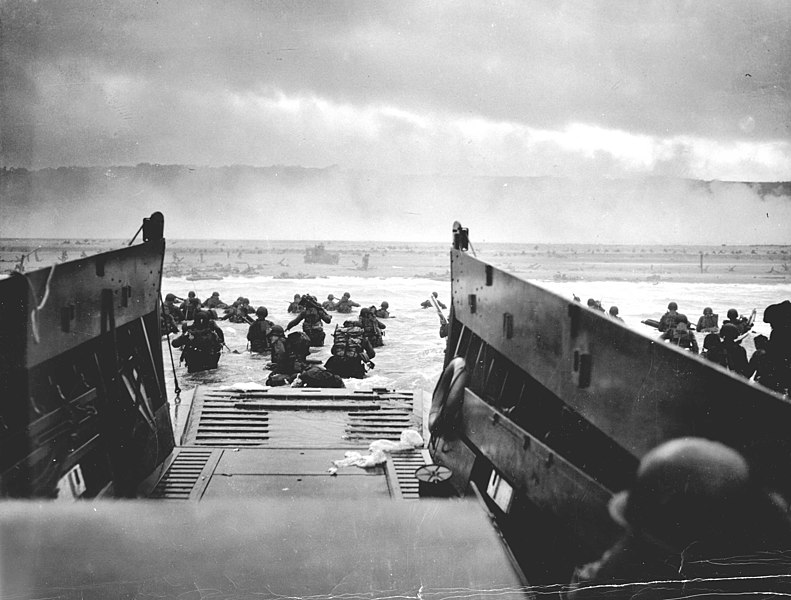

Nearly 156,000 soldiers landed (73,000 American, 61, 715 British, 21,400 Canadian) supported by 11,590 aircraft and an astounding 6,939 ships of all descriptions. By the end of the day, an estimated 10,000 of these men would be casualties; 2,500 of them were killed outright. Between 8,000 and 9,000 young Germans died as well.

Going into details of the landing and subsequent harsh fighting inland is way beyond my ability; check out iBiblio's D-Day collection for more information than you can comfortably shake a stick at.


Second, yesterday saw the passing the youngest individual to win the Medal of Honor since the Civil War.

PFC Jacklyn "Jack" Lucas, of Plymouth, North Carolina, was born on Valentine's Day in 1928. Lucas was big for his age, and lied his way into the Marine Corps in 1942 by forging his mother's signature on his parental consent forms. He was 14 years old, but stood 5'8" tall and weighed 180 pounds. Lucas was sent to Parris Island and qualified as a sharpshooter; eventually he completed a training course enabling him to serve on a heavy machine gun crew.

Military censors were the first to cotton on to Lucas' real age, having intercepted a letter to his girlfriend (who, like Lucas, was 15). Lucas was called on the carpet to explain himself to his colonel; the officer decided that Lucas was too good a Marine to send home (he was perhaps swayed by Lucas' declaration that if discharged he would enlist in the Army), but that the teenager was far too young to go into combat. As the rest of his unit shipped out to Tarawa, a disappointed Jack Lucas found himself driving supply trucks in Hawaii.

Not content with this rear-echelon duty, Lucas took matters into his own hands. Marines who got into fights were often reassigned to combat status, so Lucas began antagonizing anyone who crossed his path. This did not have the desired result; he was arrested several times but always released shortly thereafter. When he upped the ante by fighting a sergeant, Lucas was sentenced to two 30 day penalty tours, which he described as "bread and water and a lot of rock busting."

His release from the brig warranted a celebration, and on one memorable occasion he and a buddy liberated an entire truckload of beer to treat their company. After his eleventh or twelfth drink, Lucas decided more beer was in order, and went back to see if he could find a second truckload. Thoroughly soused, the Marines attracted the notice of two MPs. One of them went for Lucas, with predictable results: "I beat the dickens out of the guy. I had 18-inch biceps in those days. I was so muscled up I could run through a brick wall." He could not, however, run through a building full of angry MPs who had seen the fight in progress.

During his subsequent incarceration, Lucas decided that this was not the way to go about getting sent overseas. After telling his buddies of his intention to join a combat unit, Lucas simply walked out of his depot, wearing fresh khakis and carrying his fatigues in a bundle under his arm. Furious officers declared him AWOL that night; after a month he would be labeled a deserter and a reward was issued for his capture.

Jack Lucas reappeared aboard the USS Deuel, in the middle of the Pacific. He had stowed away on January 9, and was lucky enough to find a cousin on board who kept him fed and hidden. The day before he would have been an official deserter, Lucas - clad once again in his best uniform - approached Captain Robert Dunlap and performed the complicated diplomatic maneuver of surrendering as a deserter while simultaneously volunteering for combat. The Deuel was loaded down with portions of the 5th Marine Division, and was en route to Iwo Jima. Doubtless, the Captain had some inkling of what lay ahead, and rightly presumed that his men would need all the help they could get, no matter what source. Lucas was presented to a colonel on board, who allowed him to stay, saying "I’d like to have a whole shipload of fellows that want to fight as bad as you." Fortunately for Lucas, the question of his age did not arise. When a Marine in the 1st Battalion, 26th Regiment came down with appendicitis, Jack Lucas was issued the man's gear and assumed his place in a rifle squad.

Lucas celebrated his 17th birthday at sea, surrounded by his new comrades.

The 26th landed on Iwo Jima on February 19, and Jack Lucas got his first taste of combat on the blasted black sand beach.

"Shells were flying, people were being blown apart, and bullets were everywhere. They made hash of us. I was as anxious as ever to kill as many Japs as I could kill. It was just where I wanted to be."

He wouldn't have to wait long to prove his mettle. Jack Lucas and his squad went out on a patrol the next day, moving towards Motoyama Airfield. After destroying a pillbox, the four Americans dove into a shallow trench for cover, and were unpleasantly surprised to find eleven Japanese soldiers in a parallel trench.

"We opened fire. There wasn’t time to put your weapon to your shoulder. We just fired off hand. This last Jap I shot, I shot him in the forehead just above the eye. My rifle jammed. I was looking down at my rifle trying to get the damned thing unjammed, and when I did I saw the grenades. I was the first to see them."

Jacklyn Lucas, barely a week into his 17th year, reacted instinctively.

"I smashed my rifle butt against one and drove it into the volcanic ash, and fell on it, and pulled the other one under me. I was there to fight, and we were there to win. What you have to do you do to win. It was not in me to turn to run.

I hollered to my pals to get out and did a Superman dive at the grenades. I wasn't a Superman after I got hit. I let out one helluva scream when that thing went off.

That volcanic ash and the good Lord saved me. If I’d been on hard ground that thing would have split me in two. There was just one explosion. One was all I could handle, and I had trouble handling that one. It blew me over on my back, and it punctured my right lung, but it never knocked me out."


Jack Lucas lay in the foxhole, bleeding from over 250 separate shrapnel wounds. Every major organ in his body had been pierced by pieces of hot, sharp metal. His right arm was twisted so far beneath his body he thought it had been blown off. Believing Lucas to be dead, his three friends forced their way out of the hole and wiped out their attackers before continuing their advance.

Lucas could only move his left hand, which he kept waving to show he was alive.

A Marine appeared at the edge of the trench. Lucas was in such bad shape that he thought he'd be mistaken for a Japanese soldier, but fortunately the other Marine recognized a comrade and called for a Corpsman. Although receiving medical attention, Lucas was far from safe - the Corpsman shot a Japanese soldier who popped up from a hole in the trench, then a mortar barrage forced them to take cover. As the stretcher bearers hurried off, one stumbled and dropped his end of the stretched. Lucas fell and split his head on a rock. "I looked up at him and smiled to let him know I knew that what he was trying to do, and I appreciated it." Lucas remembered. "I could see he was exhausted."

Lucas was evacuated to the hospital ship Samaritan (after nearly being dropped into the sea; he was saved at the last second by someone catching hold of his foot), and began a long process of recovery and rehabilitation. He would undergo 21 surgeries in the following years, and would carry over 200 pieces of metal in his body for the rest of his life - the more substantial being the size of a .22 caliber bullet. He constantly confused security at airports when he set off metal detectors time and time again.

The mark of desertion was cleared from his record, and Lucas regained his previous rating of Private First Class. On October 5, 1945, Lucas and 14 other Marines and sailors were presented with the Medal of Honor by President Truman. The teenager had no idea what the Medal of Honor was; he was not in the war to win medals, he said, but to kill the enemy. Regardless, he answered the summons to Washington and was decorated with the nation's highest military honor.
Truman said he’d rather be a Medal of Honor winner than President of the United States. I said, 'Sir, I’ll swap with you.’
Life did not slow down for Jacklyn Lucas. He earned a degree in business, and started his own enterprise raising and processing beef. When the war in Vietnam broke out, Lucas joined the paratroopers and had the distinction of surviving a jump where both of his parachutes failed to open. Lucas was personally honored in President Clinton's State of the Union speech in 1995, and received a five minute standing ovation from the assembled audience. He would comment that he felt that he'd lead the life of two or three men.

He died yesterday in his hometown of Hattiesburg, Mississippi, of cancer.

Jack Lucas with reenactors at the 60th Anniversary battle of Iwo Jima
(from Hardscrabble Farm)

(Biographical information and quotes from Jack Lucas are from William Standring's article "The Story of Jack Lucas" as published in the Marine Corps Magazine issue of Summer, 1996. Accessed through Pritzker Military Library)